By Lana Henriques, Realtor® | Recognized in the top 1.5% of agents nationwide by RealTrends Verified (2026)
The short answer: in New Jersey, the seller now pays the mansion tax. Since July 10, 2025, the fee (now officially called the Graduated Percent Fee) is paid by the seller on any home that sells for more than $1,000,000. It ranges from 1% to 3.5%, and it is charged on the entire sale price, not just the amount above $1 million. That is on top of the regular Realty Transfer Fee, which sellers have always paid.
Many homeowners still believe the buyer pays it. That was true for years, and it is no longer the case. In Old Tappan and Demarest, where so many homes sell above $1 million, this is one of the first things I walk through with sellers, because it changes your net proceeds and can change how your home should be priced.
The mansion tax rates, by sale price
In simple terms, here is the mansion tax now in effect in New Jersey. The seller pays it in addition to the regular Realty Transfer Fee: homes that sell from $1 million to $2 million pay 1%, homes from $2 million to $3 million pay 2% to 2.5%, and homes above $3 million pay 3% to 3.5%. The rate is set by the full sale price and applies to the whole amount. Here are the exact brackets:
- $1,000,000 or less: no mansion tax
- Over $1,000,000 up to $2,000,000: 1% of the full price
- Over $2,000,000 up to $2,500,000: 2%
- Over $2,500,000 up to $3,000,000: 2.5%
- Over $3,000,000 up to $3,500,000: 3%
- Over $3,500,000: 3.5%
Why a few dollars can cost you thousands
Because the rate applies to the entire price, crossing a threshold changes the fee on every dollar. It starts at the very first line: a home that sells for $999,999 pays no mansion tax, while a home that sells for $1,000,001 pays 1% of the full price, or about $10,000. Two dollars more in price, about $10,000 more in tax.
It happens again at every threshold. A home that sells for exactly $2,000,000 pays 1%, or $20,000. A home that sells for $2,000,001 pays 2%, or about $40,000. One dollar more in price, roughly $20,000 more in tax.
That creates price ranges just above each threshold where a higher offer can actually leave you with less money. For example, an offer of $2,010,000 carries a $40,200 fee and nets $1,969,800 before other costs. An offer of $1,995,000 carries a $19,950 fee and nets $1,975,050. The lower offer puts about $5,250 more in your pocket.
Here is where a higher price only starts to pay off (before the regular transfer fee and other closing costs):
- Above $1,000,000: you need about $1,010,100 to match what $1,000,000 nets you
- Above $2,000,000: you need about $2,020,400 to match $2,000,000
- Above $2,500,000: you need about $2,512,800 to match $2,500,000
- Above $3,000,000: you need about $3,015,500 to match $3,000,000
- Above $3,500,000: you need about $3,518,100 to match $3,500,000
What sellers pay in total at closing
The mansion tax is separate from the regular Realty Transfer Fee. Both are paid by the seller when the deed is recorded. On a $2,000,000 home sale, for example, the regular transfer fee is about $21,675 and the mansion tax is $20,000, for a total of about $41,675 paid by the seller. Before the 2025 change, the buyer would have paid that $20,000.
Here is approximately what a seller pays in these two fees at different sale prices:
Sale price | Mansion tax | Regular transfer fee | Total the seller pays |
|---|---|---|---|
$1,200,000 | $12,000 (1%) | $11,995 | $23,995 |
$1,500,000 | $15,000 (1%) | $15,625 | $30,625 |
$2,000,000 | $20,000 (1%) | $21,675 | $41,675 |
$2,400,000 | $48,000 (2%) | $26,515 | $74,515 |
$2,800,000 | $70,000 (2.5%) | $31,355 | $101,355 |
$3,250,000 | $97,500 (3%) | $36,800 | $134,300 |
$4,000,000 | $140,000 (3.5%) | $45,875 | $185,875 |
Some transfers qualify for exemptions from the Graduated Percent Fee. Your real estate attorney will confirm whether any apply to your sale and will prepare the final figures.
What this means for pricing your Old Tappan or Demarest home
This is where strategy matters. Before your home goes on the market, I look at where your likely sale price falls against these thresholds, because it affects three decisions:
- Your list price. Pricing just above a threshold can attract offers that net you less than a slightly lower price would.
- How we compare offers. I compare every offer by what you actually keep, not just the headline number, along with financing, terms and timing.
- Negotiation. Knowing your true net at each price gives you a clear line on where to hold and where you can move.
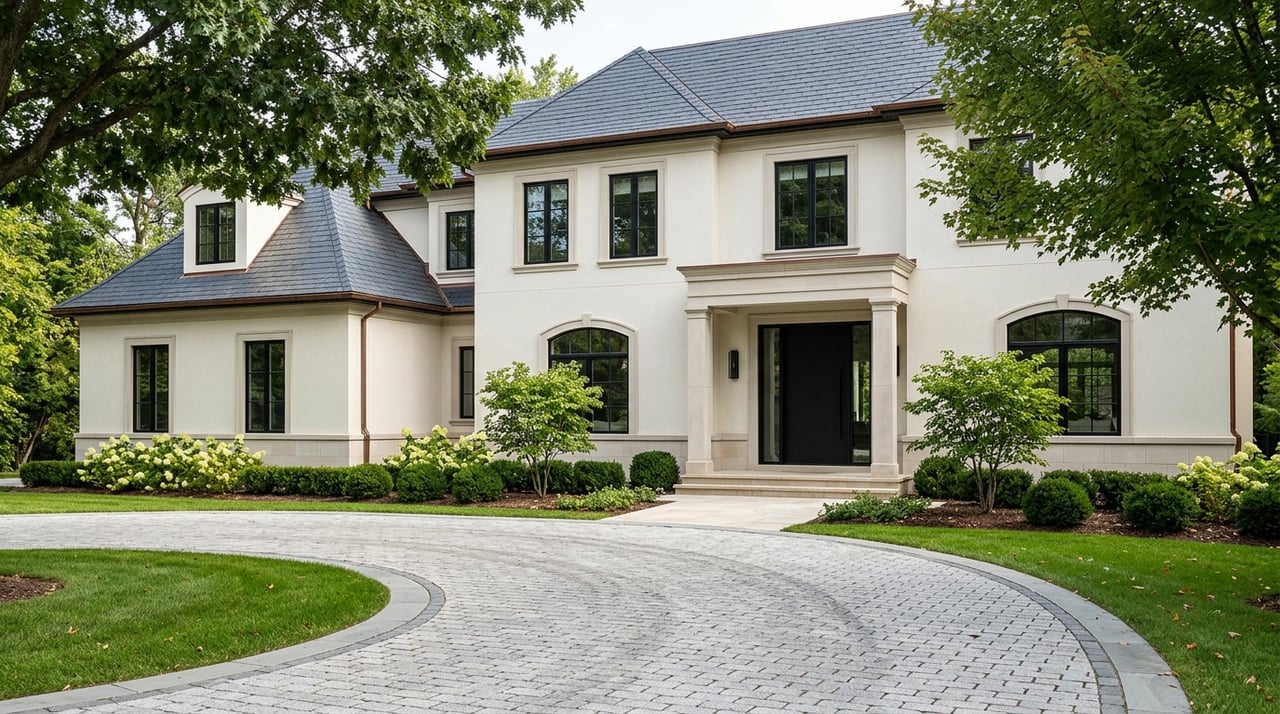
In Old Tappan and Demarest, many sales land between $1 million and $3 million, right where these thresholds sit, so a few thousand dollars in pricing can make a real difference. Homes above $1 million also sell in Norwood, River Vale, Closter and Harrington Park, so the same planning applies there. At the very top of the market, including Alpine estates and the highest sales in Old Tappan, the fee reaches 3.5%, so it becomes a meaningful part of your plan.
Want to see where your home lands? Call or text me at 201-310-6560 and I'll show you your numbers at each price, before you list.
"She is truly someone you can trust during one of the most important moments in your life." Seller, Old Tappan
Frequently asked questions
Does the buyer or seller pay the mansion tax in NJ?
The seller. Since July 10, 2025, the seller pays the Graduated Percent Fee on New Jersey home sales over $1,000,000.
Is the mansion tax charged on the full price or only the amount over $1 million?
The full price. A $1.5 million sale pays 1% of $1.5 million, or $15,000.
Is the mansion tax the same as the realty transfer fee?
No. They are two separate fees, and the seller pays both.
Can the buyer agree to pay it?
The law places the fee on the seller. How costs are handled in a specific deal, including price and credits, is something your attorney will review during attorney review.
Do condos and townhomes pay it too?
Yes. It applies to residential sales over $1,000,000, including condos, townhomes and co-op units.
When is it paid?
At closing. It is collected when the deed is recorded, and your attorney or title company pays it from your sale proceeds.
Do seniors get a discount?
Sellers who are 62 or older, blind or disabled may qualify for a reduced regular Realty Transfer Fee. Your attorney will confirm whether you qualify. There is no age-based discount on the mansion tax.
Is this the same as capital gains tax?
No. The mansion tax is a fee on the sale price. Capital gains tax is based on your profit and is a separate question for your accountant.
Does a sale at exactly $1,000,000 pay it?
No. The fee applies only when the price is more than $1,000,000.
How do I find out what I would net?
Start with a value based on what is actually selling in your town right now. You can get an instant estimate on my home value page, or see the latest numbers for your town on my market reports.
Know your number before you list
Before your home goes on the market, you should know three things: what it is likely to sell for, what you will actually keep after the mansion tax and transfer fee, and the price that puts the most money in your pocket. That is exactly what I prepare for my sellers, before a single photo is taken.
Text me your address and I'll put your numbers together.
- Call or text: 201-310-6560
- Schedule a call: pick a time that works for you
- Start online: get your home value or send me a message
Lana Henriques, Realtor® | Norwood, Old Tappan, Demarest, River Vale, Harrington Park, Closter and Alpine
This article is general information, not legal or tax advice. Fees, rates and exemptions can change. Please confirm the figures for your sale with your real estate attorney.